by Marcel Mattijssen | 22 February 2026 | AED cabinets, News
Practical experience leads to a clear choice
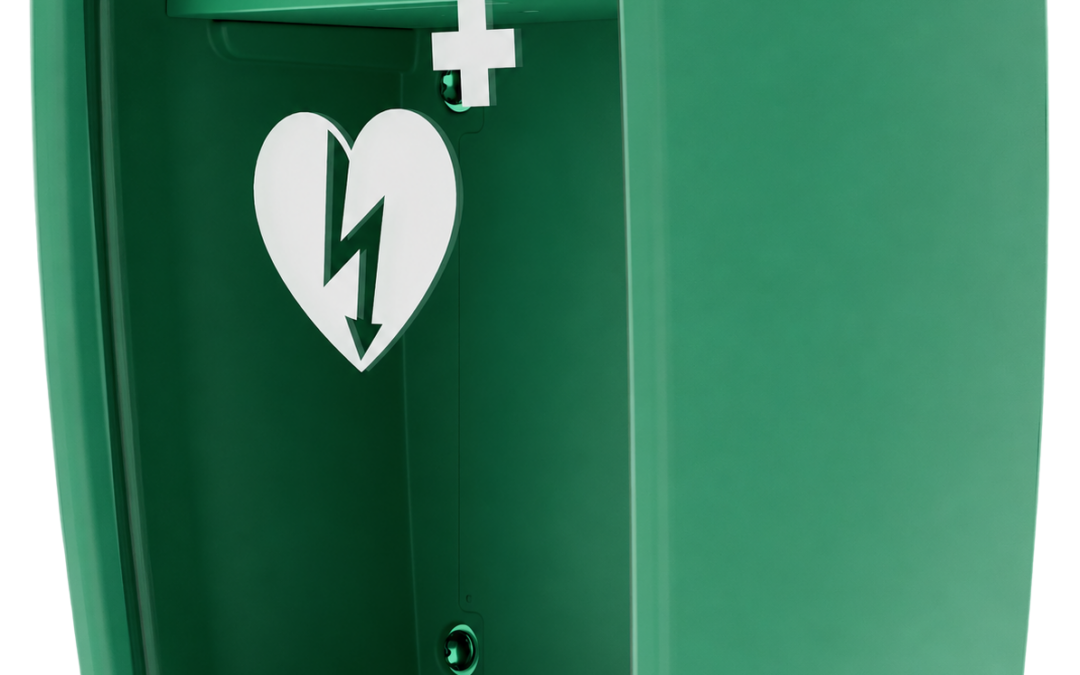
After using Rotaid AED cabinets, City AED has decided to switch entirely to cabinets from Nexus Smart AED Cabinets.
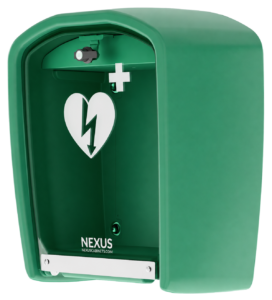
The Nexus Smart AED Cabinets enclosure
All new installations use Nexus cabinets. Existing Rotaid cabinets will also be replaced in stages over the coming period.
This decision is based on our own practical experience. Over the past few years, we have installed, maintained and inspected AEDs throughout the Netherlands, giving us a clear picture of how AED cabinets perform in practice.
Our experience with the previous cabinet
Over the past few years, we have regularly encountered situations with Rotaid cabinets that, in our view, do not meet the standards expected of a public AED cabinet.
With Rotaid AED cabinets, our observations included:
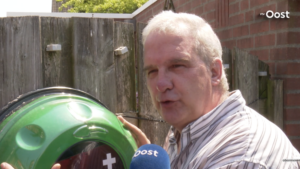
Still from an RTV Oost report. Source: YouTube (clickable)
- too many instances where the cabinet was very difficult to open, which we consider unacceptable in an emergency.
- temperatures inside the cabinet that, according to our observations, became too high on sunny days (>70°C), exposing the AED to prolonged heat that may affect its performance;
- and deterioration of the cabinet and AED through prolonged exposure to sunlight and UV radiation;
An AED cabinet must be reliable
An AED is intended to save lives. We believe the cabinet housing it should not introduce uncertainty. That is why we have chosen Nexus. The Nexus cabinet was developed in collaboration with TU Delft, with particular attention to practical experience from the field.
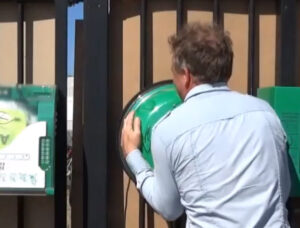
Still from a cabinet test. Source: YouTube (clickable)
According to experts, the Nexus cabinet fully meets the characteristics we consider important for long-term public use, including weather protection, temperature management, durability and a reliable opening mechanism.
For this reason, all new installations will use Nexus cabinets from now on. Existing Rotaid cabinets will also be replaced with Nexus AED cabinets as quickly as possible over the coming period.
If you have questions about this change, please contact us.
More information:
AED Cabinets Summer Testing
RTV Oost report
Nexus website
by Marcel Mattijssen | 18 February 2026 | Uncategorized
PRESS RELEASE
Blaricum, 18 February 2026
Call to HartslagNu and the Ministry of Health: make registration transparent, verifiable and complete to prevent apparent ‘gaps’ on AED maps
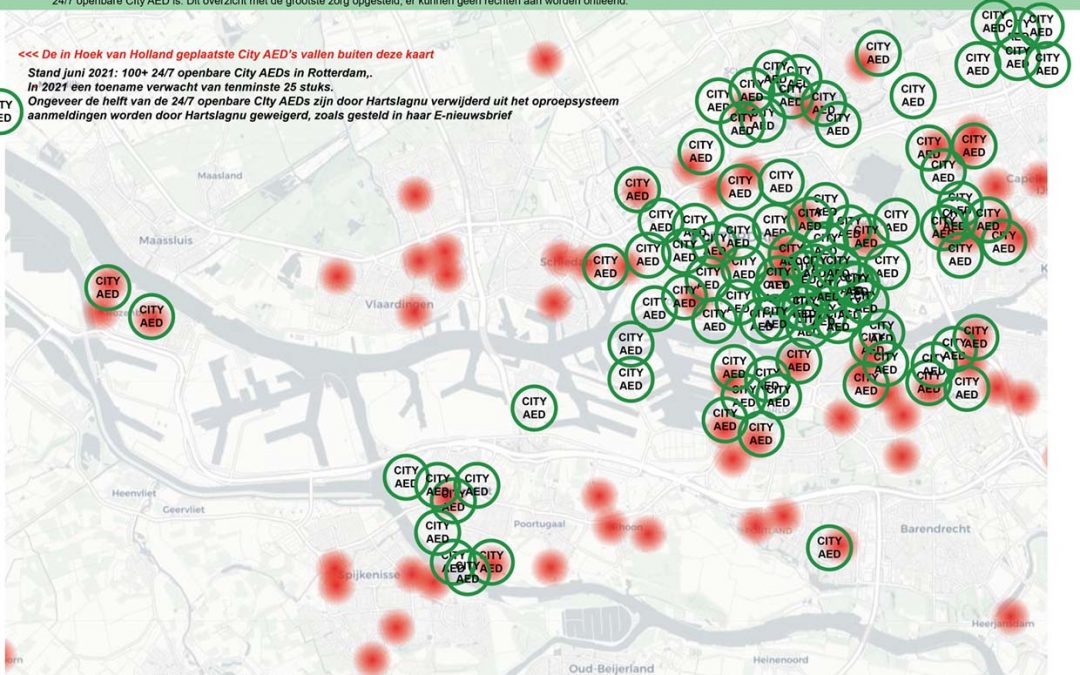
City AED Nederland reports that hundreds of public AEDs accessible 24/7 across the Netherlands are no longer visible, or are not visible, in the HartslagNu alert system. As a result, maps and apps may show an incomplete picture of AED coverage and apparent ‘gaps’ may arise in areas where an operational public AED is available.
According to City AED Nederland, this has two direct consequences. First, volunteer responders and residents may be unsure which nearby AEDs are actually included in the alert system. Second, municipalities, funds and other financiers may make decisions based on an incomplete map, potentially leading to extra AEDs being installed where a working public AED is already available.
Examples from practice: Arnhem and Amersfoort
City AED Nederland regularly receives questions from volunteer responders asking why a physically present public City AED, accessible 24/7, cannot be found in HartslagNu. City AED Nederland points to examples in Arnhem and Amersfoort, where responders say they know the AED and can locate it, but cannot see it in the system.
“This is not about putting up more cabinets, but about reliable and complete information,” says Marcel Mattijssen, founder of City AED Nederland. “Making decisions based on an incomplete map creates a false sense of security and costs lives. That is unnecessary and can be resolved with transparent criteria and a verifiable process.”
Call for action: four immediate measures
City AED Nederland calls on HartslagNu and the Ministry of Health, Welfare and Sport to take the following steps promptly:
- Publish transparent registration criteria, including clear reasons for any temporary or permanent exclusion or lack of visibility.
- A trackable registration process for AED managers, including status updates, timeframes and required supporting documents.
- An independent review and appeal process available to AED managers and owners.
- Carry out periodic audits of completeness and accuracy of AED registrations, so that administrative omissions do not create ‘gaps’ on the map.
by Marcel Mattijssen | 17 January 2026 | Uncategorized
For years, City AED has supplied resuscitation data to Amsterdam UMC’s important ARREST research project and to treating physicians. The data is read from the AED after it has been used for resuscitation. In the ARREST study area, Amsterdam and its surroundings, City AED has installed more than 100 public AEDs, which it owns and manages.
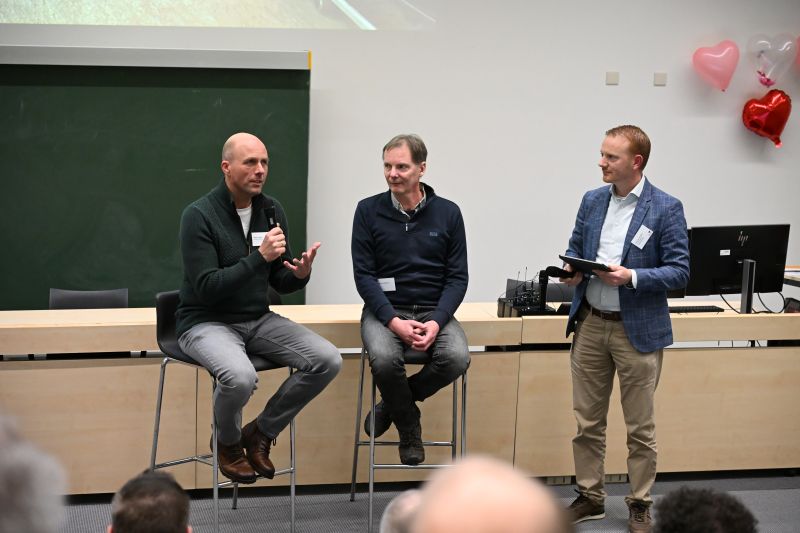
On Tuesday 13 January, the ARREST Symposium marked 20 years of data collection, and City AED was invited to attend. It was a wonderful evening with almost 100 guests. We enjoyed the positive atmosphere and the enthusiasm with which the symposium was received.
At the start of the evening, ARREST founder Ruud Koster received special recognition following his appointment as an ILCOR Giant.
by Marcel Mattijssen | 4 November 2025 | Uncategorized
It was Whit Monday, and Adam Jesney, 54, had just returned to Amsterdam after
a weekend visit to family in the United Kingdom. After leaving the airport early in the evening,
he travelled to Zuid metro station in Amsterdam-Zuid and was
about to take the tram home when he began to feel dizzy.
“My heart was racing incredibly fast,” says Adam. “I remember thinking, ‘OK, the tram will have to
wait a moment… I’ll just sit down and catch my breath.’” At that moment, he collapsed.
Meanwhile, 23-year-old Beau Schoots was on her way home after a rugby match when she saw a group of
people gathered around Adam. She approached, quickly realised how serious the situation was and
immediately took action. “I had first aid and CPR qualifications, and I wanted to help,” she says.
“Do not hesitate; act immediately – every second counts.
The AED tells you exactly what to do.”
One of the bystanders who responded after Adam collapsed happened to be a nurse and
knelt on one side of Adam. “I sat on his other side,” says Beau, “and just
after I sat down, we heard him making strange noises. We laid him on his back and
immediately started CPR. The nurse and I took turns while a
bystander called the emergency services.”
Fortunately, at office building entrances in Amsterdam’s Zuidas district, there are City
AEDs installed by the city. As the pair continued CPR with help from another bystander,
Beau spotted a City AED and asked someone in the crowd to
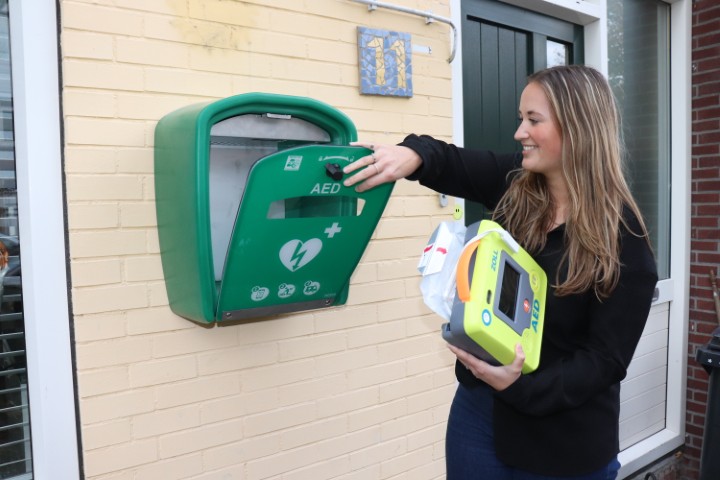
collect it. “Once the City AED was connected, we gave him one shock, and he came back.
Shortly afterwards, the fire brigade, police and ambulance arrived.”
Adam, who had no history of heart problems, says he is recovering from the
experience with a renewed appreciation for life. “The quick actions of Beau and the
other helpers saved my life; my family and I are eternally grateful to them.”
Adam and his wife Tracey later had the opportunity to meet Beau in person, a
special and emotional experience for all three. Adam’s advice is: “Take the training. Have
the courage to use an AED, and use it quickly. You really can make a difference and spare many
families a great deal of pain.”
Beau agrees: “Do not hesitate; act immediately – every second counts. The City AED tells you
exactly what to do. If you see someone who is unwell, do not simply walk past.
See whether you can help. You could be the person who makes that small but vital difference in someone’s life.”
Recent Comments